Independent project · Feb–Sep 2026
The Mechanical Embouchure
A motor-driven mouthpiece blower for saxophone. It holds a standard mouthpiece and reed, presses the reed with an artificial lip, and drives air into the instrument with a 24 V brushless blower — so a player controls air with their foot while their hands play the keys.
Why I built it
I play the saxophone, and I started this project for three reasons that kept reinforcing each other.
Endurance
A wind player’s mouth tires long before their fingers do. With the embouchure handled by a machine, a player can drill difficult fingerings for as long as they need.
Access
Playing a saxophone normally requires a healthy mouth, lips and breath. A device that supplies the air and holds the reed opens the instrument to people who can’t play it the usual way.
Robotic musicianship
Pressing keys is a solved problem — solenoids or servos can do it. The hard part is the mouth: the continuous balance of air and lip pressure on a vibrating reed. Without it, a robotic saxophonist isn’t possible.
How it works
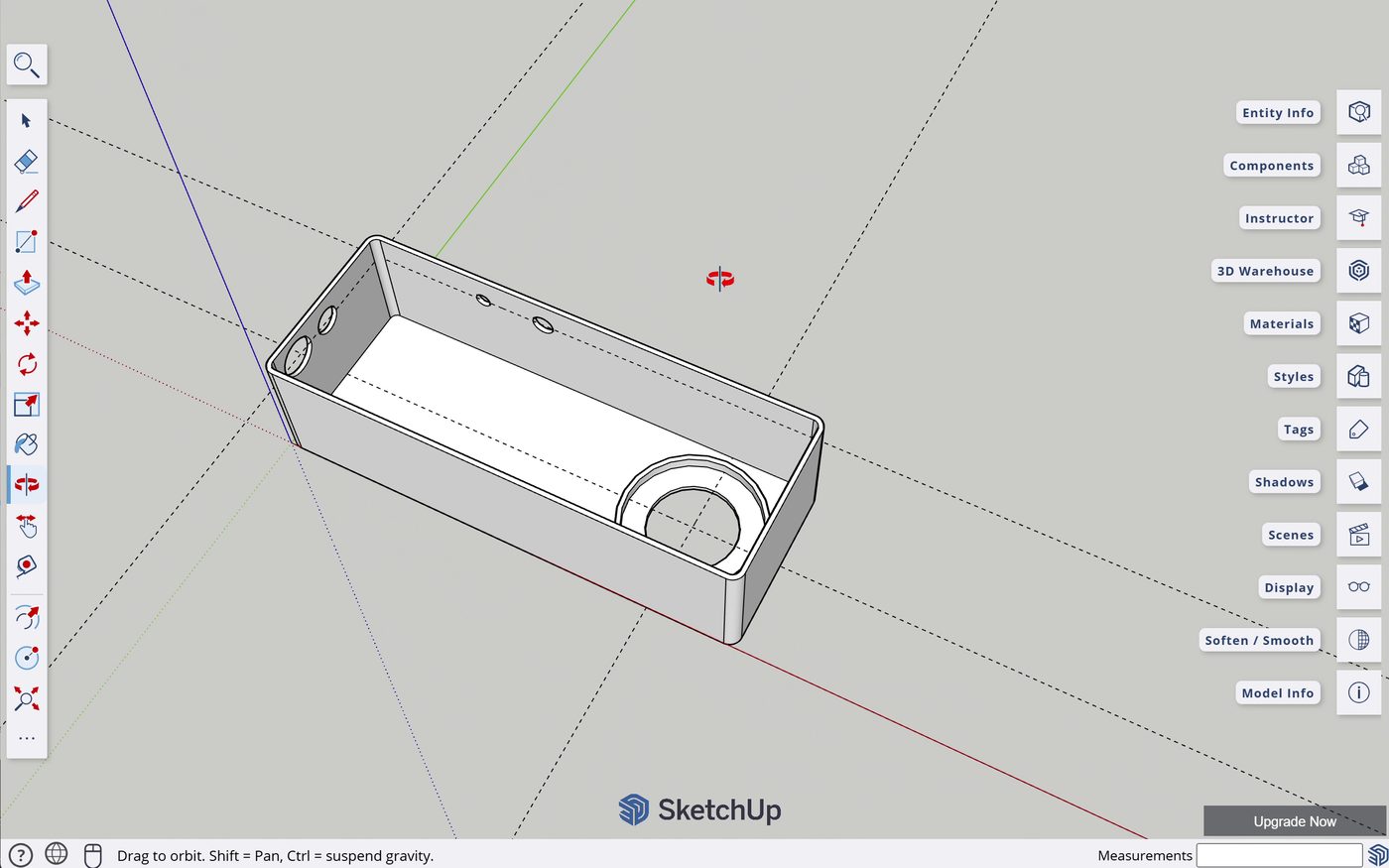
Design in CAD
Every mechanical part was modelled in SketchUp, then printed on a Bambu Lab A1 in PLA.
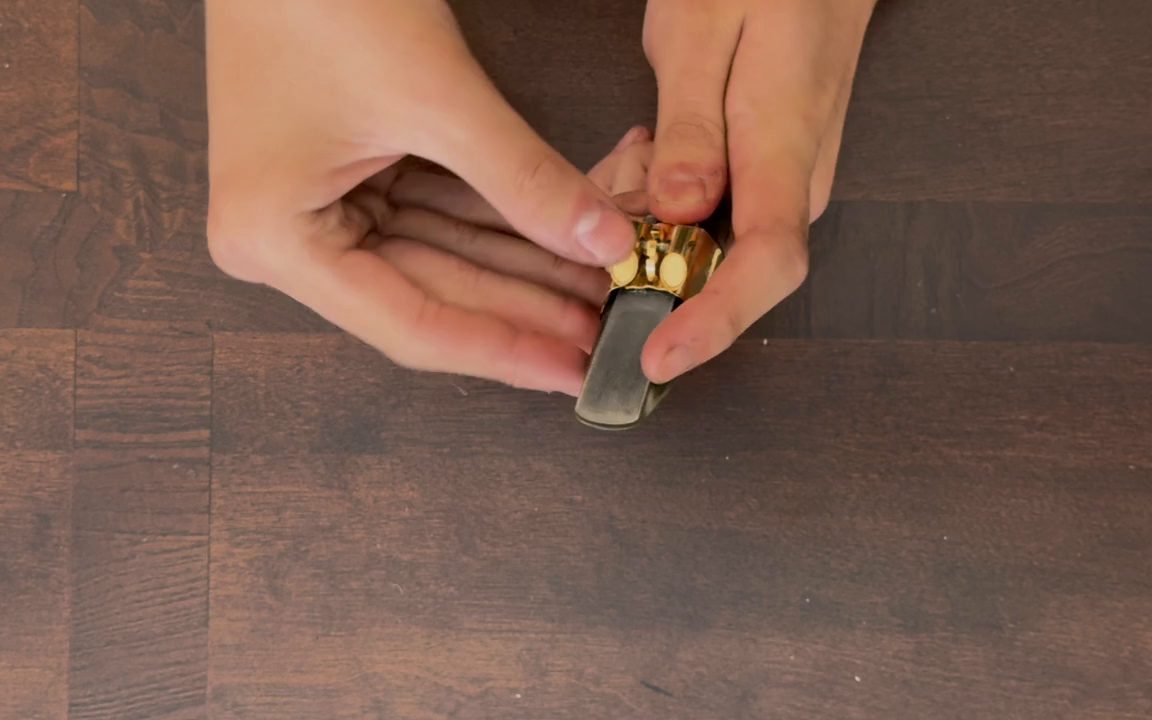
Mouthpiece mount and air seal
A custom holder secures an ordinary mouthpiece and reed, so any player’s setup can be used. Leakage was the biggest early problem — any gap bleeds pressure and the reed won’t speak reliably. Rubber bands held the parts together but didn’t seal; silicone tape conforms to the mouthpiece and gives an airtight, repeatable seal.
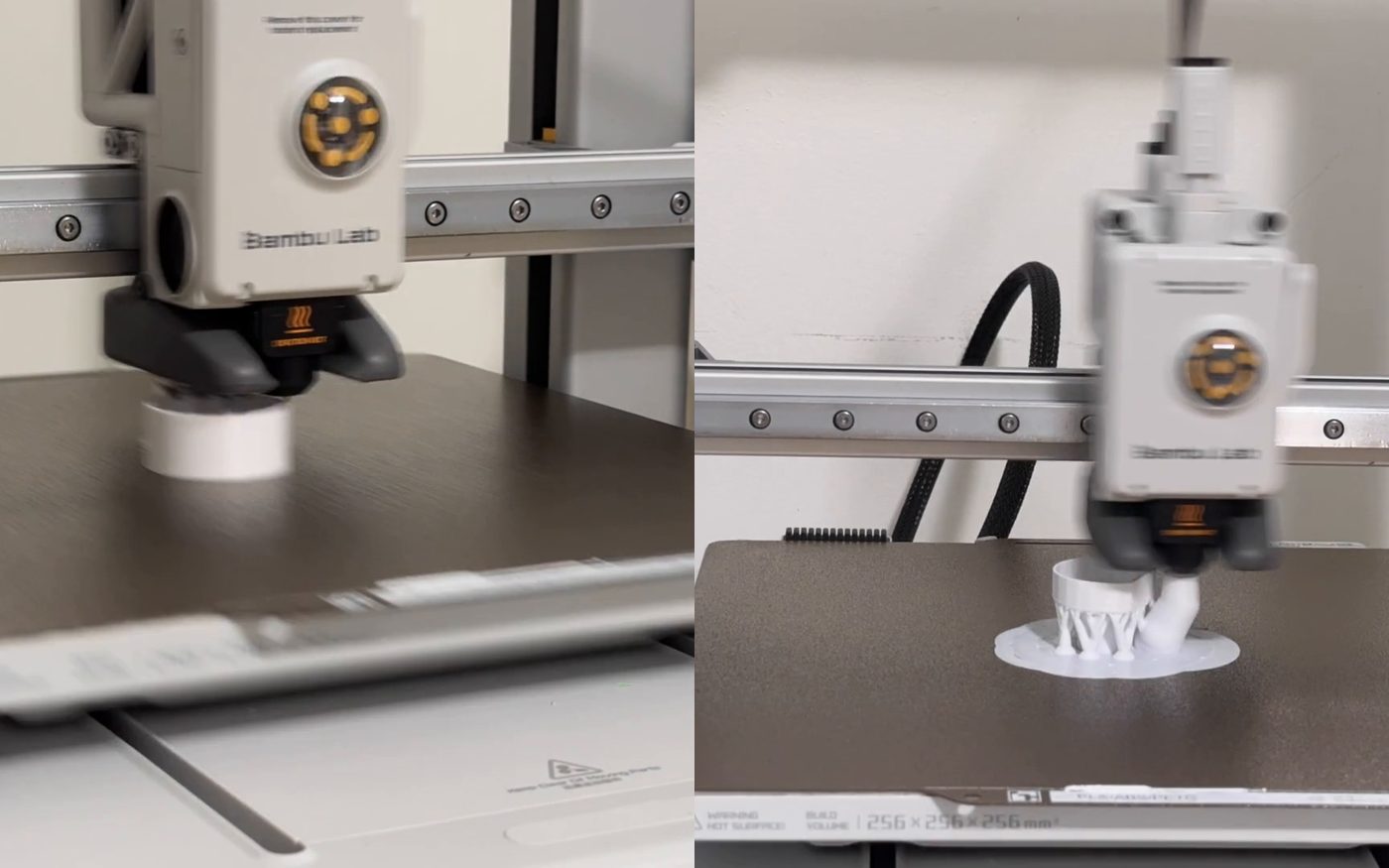
Artificial lip
A human lip does more than hold the reed — it damps it and controls how freely it vibrates. A 3D-printed sliding flap with a soft foam tip presses on the reed the way a lower lip does, and a screw sets the pressure precisely. The holder and lip went through about nine design iterations before the reed responded consistently.
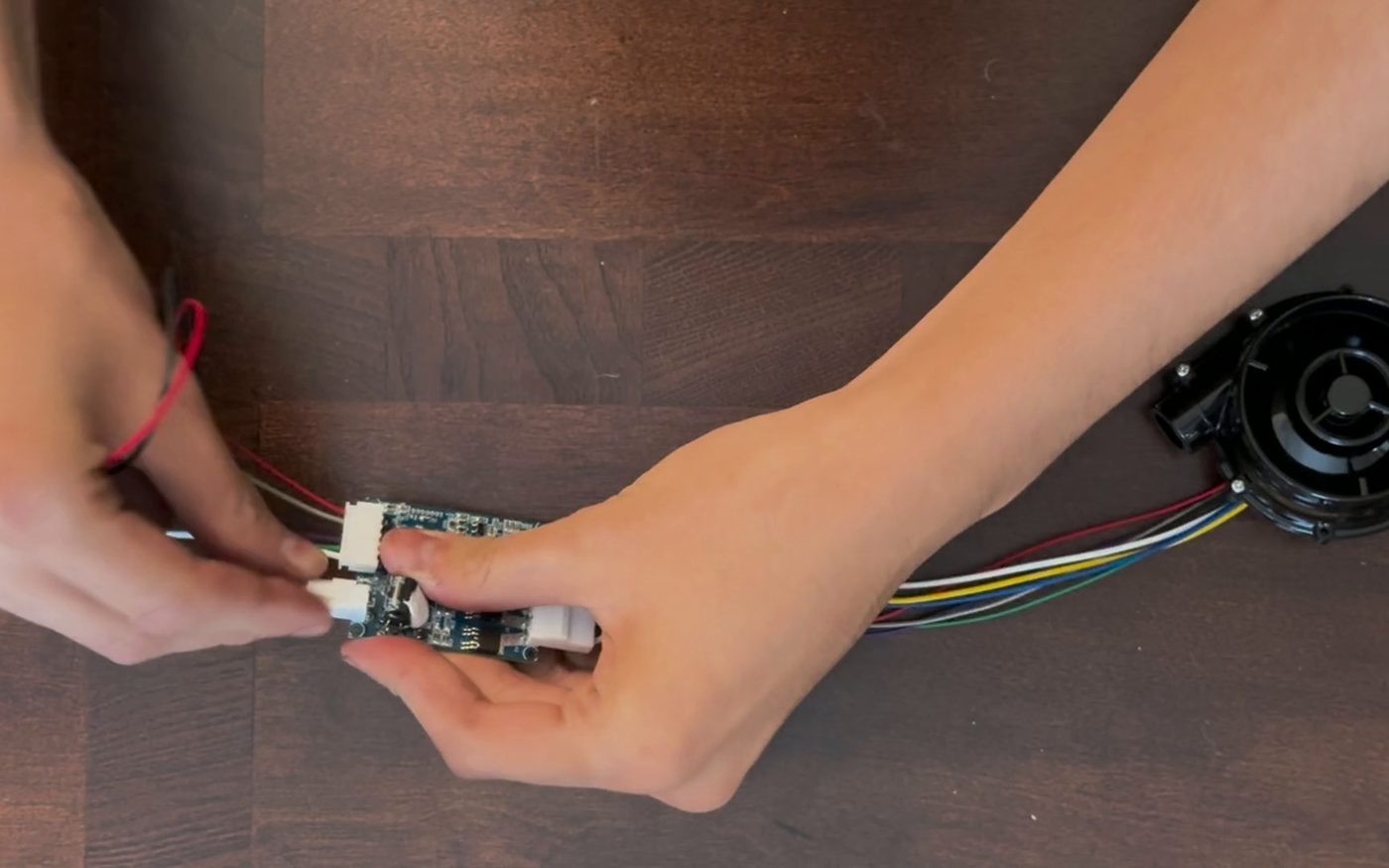
Air supply and control
A reed needs a narrow range of pressure — roughly what a human produces — with enough continuous flow to sustain the note. A 24 V brushless centrifugal blower (up to 4 kPa) feeds the holder through a silicone tube. A foot pedal with a linear Hall-effect sensor feeds an Arduino, programmed in C, that sets blower speed in real time. I wired and soldered the electronics myself.
Finding the right air source
Choosing the blower was a lesson in the difference between pressure and flow. I researched human blowing-pressure ranges in the literature, then tested:
| Source tried | Result |
|---|---|
| Tire pump | Wrong balance of pressure and flow; could not sustain a playable tone |
| Mattress pump | Wrong balance of pressure and flow; could not sustain a playable tone |
| 24 V brushless centrifugal blower | Pressure and flow in the right range; smooth, stable and speed-controllable |
Because the blower delivers stable pressure with plenty of flow, the device can sustain a tone indefinitely — something no human player can do.
It plays
The hardest problems
Finding the working window. A reed only speaks within a narrow combination of air and lip pressure. Too little and there’s no sound; too much and it squeaks or chokes. I worked from literature values toward that window through a lot of trial and error.
Reaching high notes. The hardest challenge. In the upper register the balance becomes very narrow, and small errors produce squeaks or silence. It took careful tuning of the lip adjustment and blower speed together.
Sealing and consistency. Small leaks caused inconsistent results that were hard to diagnose. Fixing the seal made every later test more reliable.
Fine control. Clean note starts and usable dynamics depended on tuning the relationship between pedal position, blower speed and pressure at the reed.
What I learned
The saxophone is really a coupled physical system of air, reed and resonator, and what a player does with their mouth is precise control of that system. Replacing it with a machine forced me to understand it — why pressure and flow are different problems, why the high register is so unforgiving, and how much the lip shapes the sound. I also learned the engineering process itself: iterate quickly, test one variable at a time, and accept that most attempts fail before one works.
What’s next
- Active lip control — an actuator in place of the screw, so lip pressure changes in real time with air pressure. That is the key to reliable high notes and more expressive playing.
- Alternative inputs — breath or other body sensors, so players with different abilities can control the instrument.
- A robotic saxophonist — combine the embouchure with a key-pressing mechanism.
Specifications
| Instrument | Alto saxophone, standard mouthpiece and reed |
|---|---|
| Air source | 24 V DC brushless centrifugal blower, up to 4 kPa, via silicone tube |
| Artificial lip | 3D-printed PLA sliding flap, foam tip, screw-adjustable pressure |
| Air seal | Silicone tape |
| Controller | Arduino (C, Arduino IDE) |
| Input | Foot pedal with linear Hall-effect sensor (continuous) |
| Design & fabrication | SketchUp; Bambu Lab A1, PLA, ~9 iterations |
| Development time | ~8 months, independent |
Skills: mechanical design and CAD · 3D printing and rapid prototyping · saxophone acoustics and reed behavior · electronics and soldering · embedded programming (C/Arduino) · system integration and testing.